Release notes
Accretion 0.3.0: more to do with your mass
· Tideglass Studio · 4 minute read
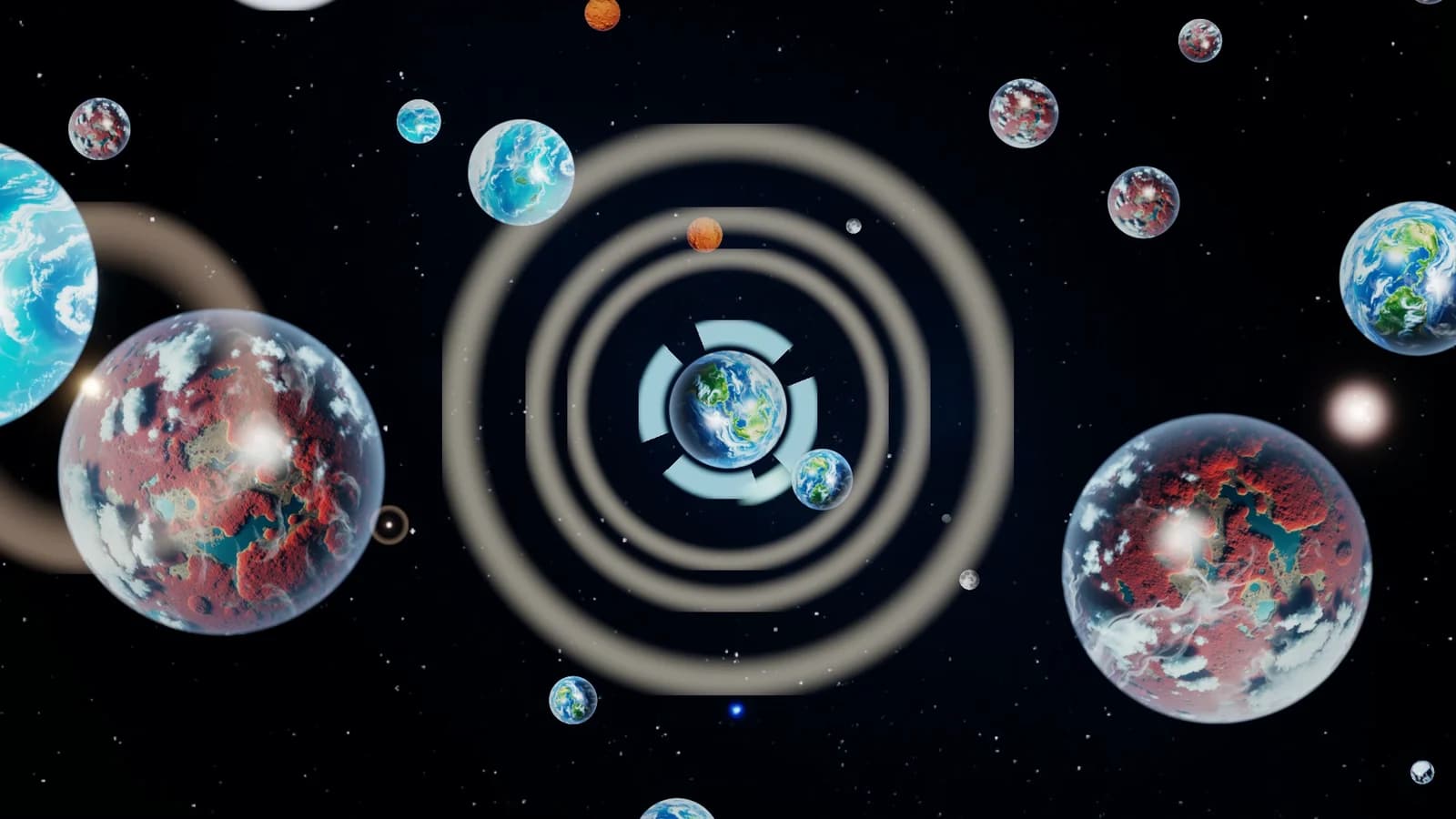
Version 0.3.0 of Accretion: Clash of Planets is out on Google Play. You still start as a speck of dust, absorb what is smaller and dodge what is bigger. Most of what is new starts at LV 2, where the game begins to give you things to do with the mass you have gathered.
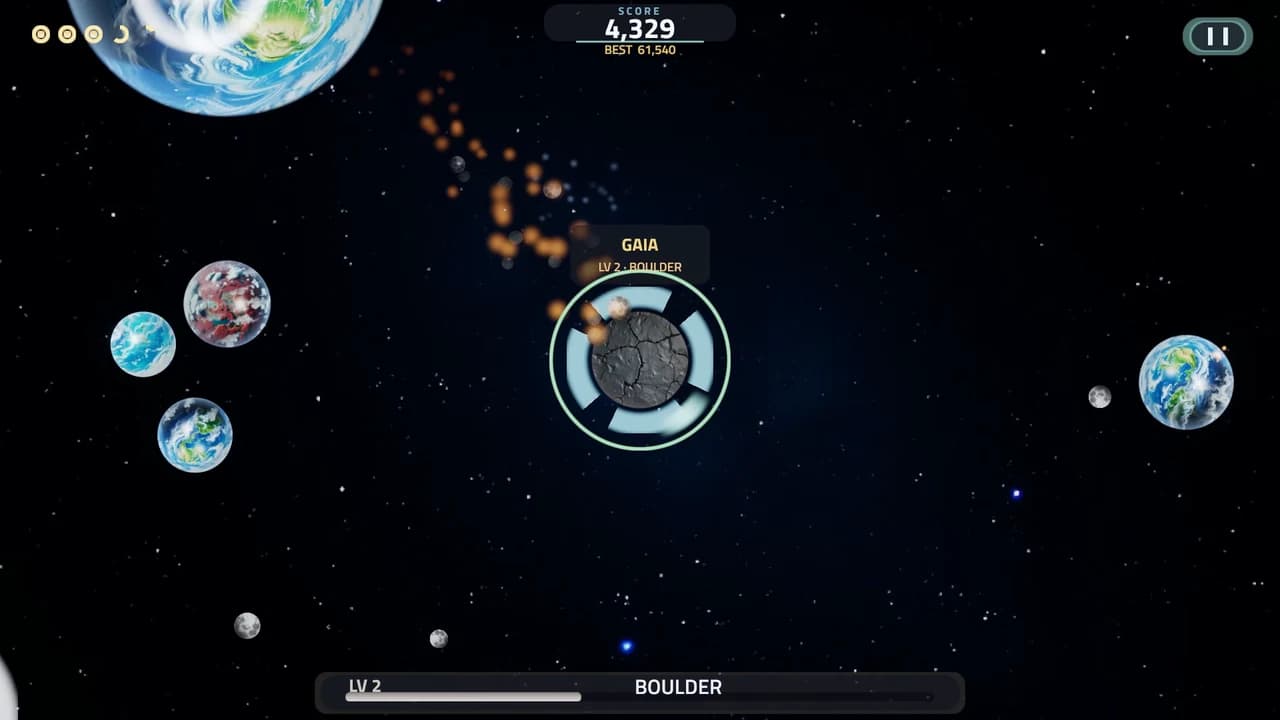
Burn and Skim, from LV 2
Push past the thumb pad's outer ring, or hold Shift on a keyboard, and you burn: a little mass for a burst of speed. Hold a burn past two seconds and it heats up and costs more. Let go and the next burst is cheap again. A burn is how you get clear of something big, and how you catch something fast.
Skimming is the other half of it. Pass close to a body too big to eat without touching it and your Tidal Charge fills. The closer and faster the pass, the more it fills. The charge pays for a burn before your mass does.
Throw a moon, from LV 3
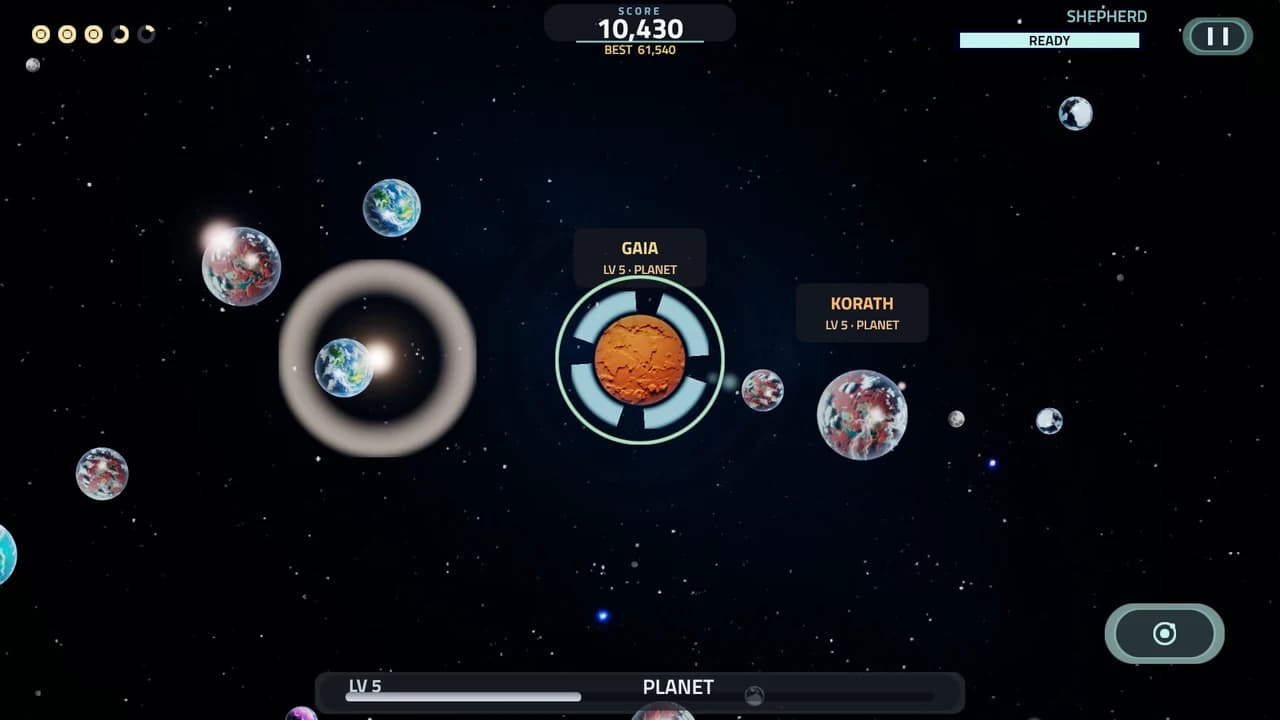
Shepherd is a card you can pick from LV 3. Its button, lower right, pulls a smaller body into orbit, where it shields you from hits. In 0.3.0 you can also throw that moon. Hold the button past a quarter second to arm your outermost moon, then release to throw it the way you are steering. A small moon flies fast and a big one slow, and a thrown moon plows through anything smaller on its way. Throws have a four second cooldown.
Six rivals, each with a temperament
Every run has six named rivals, and in 0.3.0 each has a temperament of its own. KORATH hunts from farther off. VESPER waits near big bodies and strikes as you pass. OLM is dense, slow to turn and hard to break. CINDER goes after moons, yours included. NYX scavenges debris. RHEA keeps moons of its own.
Break a world, from LV 4
From LV 4 a hard throw breaks material off what it hits, and the pieces fly on for anyone to eat. Land two solid throws on a named rival in a short while and it shatters into debris. OLM is tougher and takes more. From LV 5 every rival carries moons, and a rival's moons stop your throws, so strip them first. Molten Core also becomes a ram: hit a near-equal body fast enough, with a burn or a gravity dive, and it breaks instead of you, for a tenth of your mass.
Read the sky, from LV 1
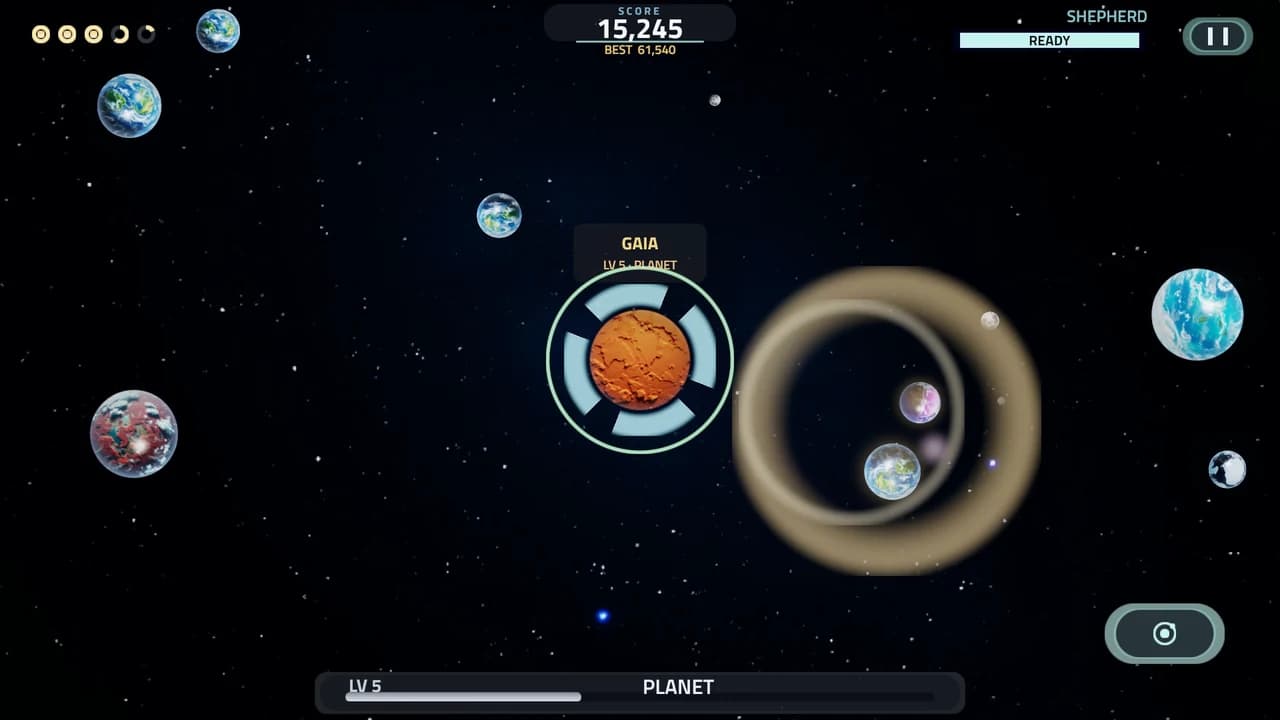
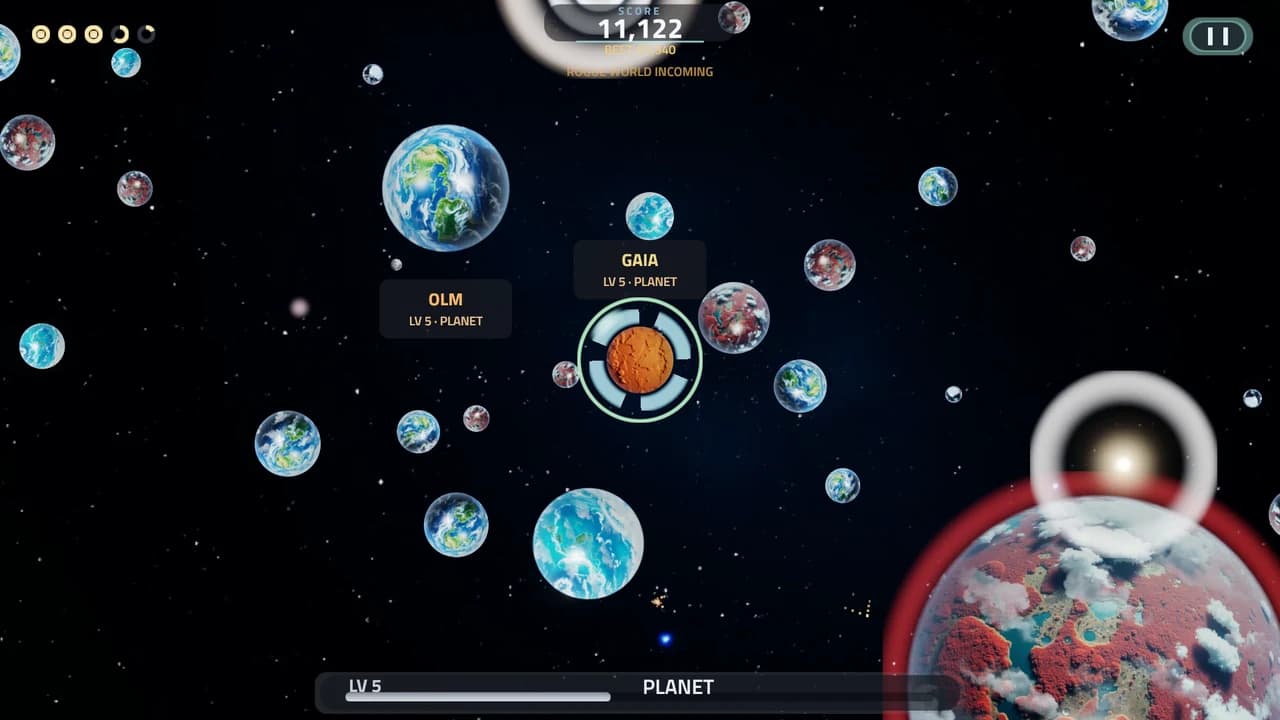
A little over a minute into a run, cosmic events begin. Each one arrives with a warning and an arrow at the edge of the screen pointing toward it: a comet stream, a debris bloom, a gravity well, solar wind, a rogue world or a moonfall. Some of them feed you and some of them can kill you.
Each week one Cosmic Cycle, the same for every player, changes a part of the game for that week. The six are Great Comet Passage, Rival Ascendancy, Moonfall, Solar Tempest, Heavy Universe and Fracture Season. The pause screen names the one in force.
Your world awakens at LV 8
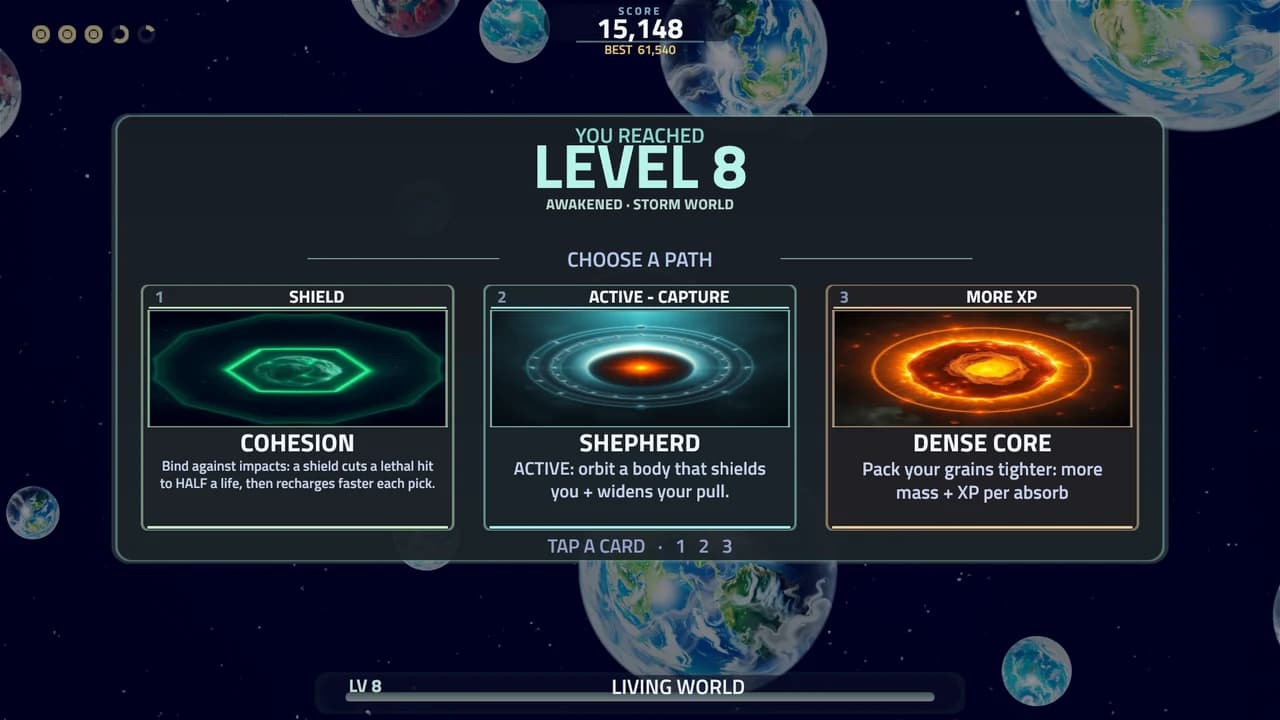
The climb runs three levels past Living World. At LV 8 your world takes a name from the paths you invested in most, and a faint aura in its color. Solar Wind wakes a Storm World, Cohesion a Fortress World, Shepherd an Orbital World, Dense Core a Massive World and Sticky Ice an Accretor World. Two strong paths make a hybrid such as Storm and Fortress World, and an even spread makes a Balanced World. Each one changes how your world plays for the rest of the run.
Reach at LV 10
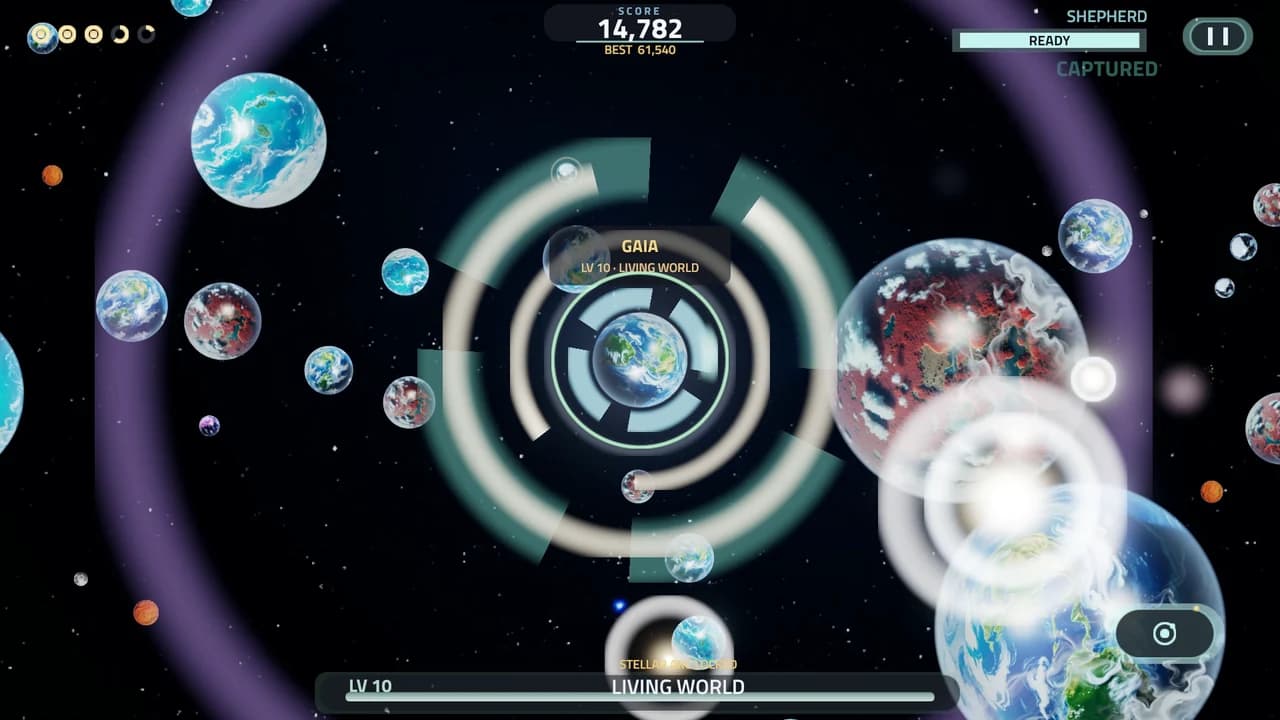
At LV 9 your gravity starts tearing moons off the worlds that hold them. LV 10 offers Reach. Hold the Shepherd button about a second, then let go. Everything near you falls inward, the lighter the faster, and up to three worlds small enough to hold are seized into orbit. With half a Tidal Charge it pulls harder. The climb holds at LV 10 in this version.
The boards
On Android the game has two Google Play leaderboards, KNOWN WORLDS for all time and THIS WEEK. A run's score goes to the boards the moment it passes your best, and again at the run's end. Offline, it waits and posts when the phone is back online. Google keeps one row per player on each board, and that row holds the player's highest score.
If you are not showing on the board, your Play Games profile is almost always private, which is how Google sets every new one. The how-to page has the steps.
Smaller changes
- Planet names can be up to 16 characters, accented letters included.
- Settings on Android gains HAPTICS, RATE ACCRETION and SEND FEEDBACK.
- Tap a row on the board to report a planet name, or to hide it on your phone.
In the browser
The browser version runs the same 0.3.0 rules with no install. It needs a free Tideglass account and is opening in stages, so you may be asked to sign in or request access first. It keeps its own season board, where the server replays every run before it counts, and lets you race the ghost of another player's recorded run. Web progress and Android progress are kept apart.
Get it
Accretion is free. If you are new to it, how to play walks through a run from the first drift to Reach.